-
Sterling silver is made from 92.5% pure silver, blended with 7.5% alloy metals (usually copper) to increase its strength. You will often see it marked with a ‘925’ stamp, indicating its silver content.
Pure silver on its own is too soft for jewellery, which is why sterling silver is the industry standard.
One thing to keep in mind is that sterling silver can tarnish over time when exposed to air and moisture. The good news is that tarnish is surface level and easily polished away, restoring its shine.
Sterling silver is perfect for everyday pieces, lightweight, easy to wear, and endlessly versatile.
-
9ct gold is a popular choice in New Zealand, appreciated for its balance of affordability, strength, and suitability for everyday wear. Containing 37.5% pure gold, it is alloyed with metals such as silver and copper, creating a durable composition that stands up well to daily use.
The lower gold content makes 9ct gold more cost-effective than higher carat options, while the additional alloy metals give it excellent durability. It’s a practical choice for everyday jewellery, particularly for those with active lifestyles or who are harder on their jewellery.
Its colour is generally a little paler and less rich than higher carat gold, but it still offers a beautiful warm gold tone at a more accessible price point.
It’s worth noting that 9ct gold can be more prone to tarnishing or discolouration over time, particularly when exposed to moisture, chemicals, or skin oils. This is nothing to worry about, and the surface can be cleaned and polished to restore its appearance.
-
14ct gold is a sweet spot, just the right mix of luxury and strength. With 58.5% pure gold, it’s richer in colour than 9ct but still tough enough to handle daily wear without being too precious.
Thanks to the blend of gold with metals like silver and copper, it’s durable, dependable, and has a warm golden glow. Whether you're after something for everyday wear or a piece that feels a little more special, 14ct gold brings the best of both worlds.
-
18ct gold is the highest purity I work with; a premium choice known for its rich colour and quality.
Made from 75% pure gold, it has a deeper, warmer tone that sets high end pieces apart. While 18ct gold is less durable than 14ct, it’s much more resistant to tarnishing than 9ct or 14ct.
18ct is best suited for special pieces. With a little extra care during wear, it will stay looking beautiful for years to come.
-
Yellow, white, and rose gold all start with pure gold, but the difference lies in the metal alloys they’re mixed with, which affect both colour and properties.
Yellow gold is the closest in appearance to pure gold. It is mixed with alloys such as silver and copper to maintain its warm, rich colour while improving durability.
White gold is blended with metals like palladium or nickel to give it a silvery white tone.
Rose gold gets its soft pink hue from a higher copper content. It is slightly more durable than yellow or white gold because of copper’s strength, but it may cause reactions for those with metal sensitivities.
Each has the same gold content in 9ct, 14ct, or 18ct form. The difference is entirely in the alloy mix and the look you love.
-
Platinum is a precious metal and one of the rarest elements found on Earth. Naturally white in colour, it is highly resistant to tarnishing and corrosion, making it an excellent choice for jewels worn everyday.
I work with platinum alloys containing 95% platinum. Denser than gold, platinum has a nice, noticeable weight.
Its durability, and hypoallergenic nature make platinum a premium choice for engagement rings, wedding bands, and heirloom-quality jewellery.
-
All gold plating is done over solid sterling silver. While I always recommend solid gold for longevity and heirloom pieces, gold plating is an affordable way to enjoy gold jewellery. It simply requires a little extra care.
A fine 2-micron layer of 14ct gold is coated over a sterling silver base. This is done either in my studio or by a trusted plating business based in Aotearoa.
Gold plating will naturally wear over time with regular use. When this happens, you can have your piece re-plated, or enjoy it as a sterling silver piece once the plating has worn away.
I offer a re-plating service on all my jewellery for a small fee.
To extend the life of your gold-plated jewellery, store it somewhere safe and away from other objects that could cause scratching or damage. I generally avoid plating rings as they experience significantly more wear and tear than earrings and necklaces, making them less suitable for gold plating. However, this can still be requested if you’re comfortable with it wearing faster.
Each piece of jewellery is cast at a Tāmaki Makaurau based foundry.
All casting metal alloys are developed and perfected by their inhouse chemists and production experts to ensure the quality of fabricated materials is maintained.
Owing to the onsite refinery and their continued commitment to maintaining positive environmental practices, the majority of precious metals used to produce fabricated products have been recovered by refining recycled metal. All batches are assayed for complete confidence.
All alloys are nickel free.
Understanding Metal Alloys
All gemstones are sourced through trusted suppliers across Aotearoa, Australia, and Asia, with ethical practices kept in mind.
Below is a selection of some favourite gemstones, along with a little information to help you navigate the variety available and discover which might best suit your design.
There are plenty of beautiful gemstones not listed here, so if you have something specific in mind, don’t hesitate to ask.
Finding the right gemstone is a bit of a treasure hunt. A helpful place to start is by working out what matters most to you, from most important to least important. This might be budget, colour, cut, gemstone type, or something else entirely. Knowing your priorities makes it easier to narrow the search and focus on what matters most.
Factors such as rarity, durability, colour, and clarity all contribute to a gemstone’s value, but ultimately, the most important thing is choosing a stone that you are drawn to and that reflects the wearer’s personality.
Mohs Scale
The Mohs scale measures a mineral’s hardness and resistance to scratching, ranked from 1 (softest) to 10 (hardest). It’s a useful guide when considering how suitable a gemstone is for different types of jewellery and everyday wear.
Understanding Gemstones
-
Mohs scale rating: 10
The hardest rated gemstone, making them the most popular engagement ring option as they are highly resistant to scratching.
Lab-Grown vs Mined Diamonds
Chemically mined diamonds are the same material. Both score 10 on the Mohs hardness scale, both sparkle in the same way, and both can be cut and graded using the same standards.
The biggest differences lie in their origin and market value. Mined diamonds are formed naturally within the Earth and extracted through mining, while lab-grown diamonds are created using technology that replicates the conditions under which diamonds form.
When it comes to ethics, it isn’t black and white. Mined diamonds can raise concerns around labour practices, community impacts, and sourcing transparency, while lab-grown diamonds avoid mining but require significant energy to produce. Neither option is entirely impact-free.
Lab-grown diamonds are significantly more affordable than mined diamonds. However, they currently have lower resale value, while natural diamonds tend to retain value more strongly over time.
Neither is inherently the "right" choice. Some people are drawn to the rarity and geological history of a mined diamond, while others prefer the accessibility and modern production of a lab-grown stone. The best choice is the one that aligns with your values, budget, and what excites you most.
The 4Cs
Cut
Cut is all about how a diamond handles light. A well-cut stone will sparkle and come alive as it moves. Grades range from Excellent to Poor
Colour
Colour measures how colourless a white diamond is, graded from D (colourless) through to Z (light yellow or brown). While colourless diamonds are often considered the most desirable, this is entirely a matter of personal preference. Some people love an icy white diamond, while others are drawn to warmer tones. My favourites sit around the M-N range, a soft pale yellow can give the stone a little extra warmth and character.Diamonds also come in fancy colours, including yellow, pink, blue, green, champagne, cognac, and brown, with lab-grown options available across many of these shades as well. These are graded differently from white diamonds.
Clarity
Clarity refers to the tiny inclusions and surface characteristics found within a diamond. While flawless stones are valued highly by the industry, I think inclusions are something to embrace. They can add personality, uniqueness, and often become part of what makes a diamond feel truly individual.Carat
Carat is simply a measure of weight, not size. Larger diamonds generally weigh more, but two diamonds of the same carat weight can appear quite different in size depending on their proportions and cut.For a deeper dive into the 4Cs, visit the GIA website.
-
Mohs scale rating: 9
With sapphires and rubies ranking just under diamond on the Mohs scale, they are also popular options for engagement rings and pieces designed for daily wear.
Ruby
Considered a precious gemstone
Ruby is loved for its rich red to pinkish-red colour, ranging from vibrant raspberry and vivid scarlet to deep crimson.
Inclusions are common in rubies and are often considered part of the stone's natural character.
A classic, timeless, and romantic choice, ruby has been treasured for centuries and remains one of the most sought-after gemstones.
SapphireConsidered a precious gemstone
Sapphire is one of the most popular gemstones and can be found in a rainbow of colours, making it a great choice to fit any tastes and all personalities.
Australian parti sapphires are a particular favourite of mine, with their mix of blues, greens, and yellows within a single stone.
Durable and well suited to everyday wear, you really can't go wrong choosing a sapphire for a special piece such as an engagement ring or future heirloom.
-
Mohs scale rating: 7.5-8
Emerald
Considered a precious gemstone
Emerald is known for its green colour, which can range from soft green through to deep, vivid green.
Most emeralds contain natural inclusions, often referred to as their "garden", which are considered part of the stone's charm and beauty.
A timeless gemstone that has been treasured for centuries, Emerald’s are considered one of the most special and desirable gemstones.
Spinel
Considered a semi-precious gemstone.
Spinel is known for its beautiful range of colours, from vivid red and pink through to soft grey, purple, blue and black. Red spinel has historically been mistaken for ruby, including some famous gemstones in royal collections.
Once relatively overlooked, spinel has become increasingly popular. Its beautiful range of colours and durability make it a great choice for those looking for something a little different.
Grey Spinel are a personal favourite of mine.
Topaz
Considered a semi-precious gemstone.
Although frequently associated with golden yellow and blue, it can be found in a variety of colours including colourless.
The rarest are natural pink, red, and fine reddish orange, known as Imperial Topaz.
Aquamarine
Considered a semi-precious gemstone.
Aquamarine is best known for its pale blue colour, though it can also occur in greenish blue, green, and occasionally colourless varieties.
This is the gemstone for those with a connection to the ocean or a love of water.
Morganite
Considered a semi-precious gemstone
Morganite is best known for its delicate pink to peachy-pink hues, though it can also occur in softer shades ranging from blush pink to salmon.
Its gentle colour makes it a romantic choice, perfect for those who prefer something subtle, soft, and elegant.
-
Mohs scale: 7 - 7.5
Tourmaline
Considered a semi-precious gemstone.
Tourmaline is where I believe you can have the most fun with colour. from vivid greens and blues to pinks, oranges, and everything in between, tourmaline offers something for almost every taste.
Multi-coloured tourmalines are particularly spectacular, with their unique colour combinations making each stone a true statement of personality and individuality.
Tourmaline often contain inclusions, formed as the crystal grows in mineral-rich environments. These are part of the stone's natural character and, as always, are something to appreciate rather than see as a flaw.
Zircon
Considered a semi-precious gemstone.
Zircon is one of the oldest minerals found on Earth, with crystals discovered in Australia dating back around 4.4 billion years.
Often described as tiny time capsules, zircon crystals retain chemical fingerprints from the earliest history of our planet.
Zircon occur in a wide range of colours including yellow, red, brown, blue, green and champagne tones. They are a lovely choice for people who love autumnal colours.
-
Mohs scale rating: 7
Citrine
Considered a semi-precious gemstone.
A gemstone that resembles the sun with colours that range from pale yellow to deep golden, amber, and brownish-orange.
It is good to keep in mind that prolonged and direct exposure to intense sunlight and UV rays can cause the colour to fade or wash out completely, sometimes leaving it looking pale or clear.
Garnet
Considered a semi-precious gemstone.
Garnet, while most commonly known for its deep red colour, can also be found in a range of other colours including green, orange, pink, and purple.
Garnet has been used in jewellery for thousands and is still well loved. I will never tire of seeing a gold and garnet combination.
Amethyst
Considered a semi-precious gemstone.
Amethyst is a variety of quartz known for its purple colouring, which can range from soft lilac through to deep violet.
Amethyst always makes me think of fantasy worlds filled with fairies, mermaids, and dragons. Its a wonderful choice for those drawn to something a little magical.
Peridot
Considered a semi-precious gemstone.
Known for its vibrant fresh green peridot is a real favourite for people.
Because of how peridot forms in the Earth's mantle and is brought up via volcanic activity, the gem nearly always contains some natural inclusions.
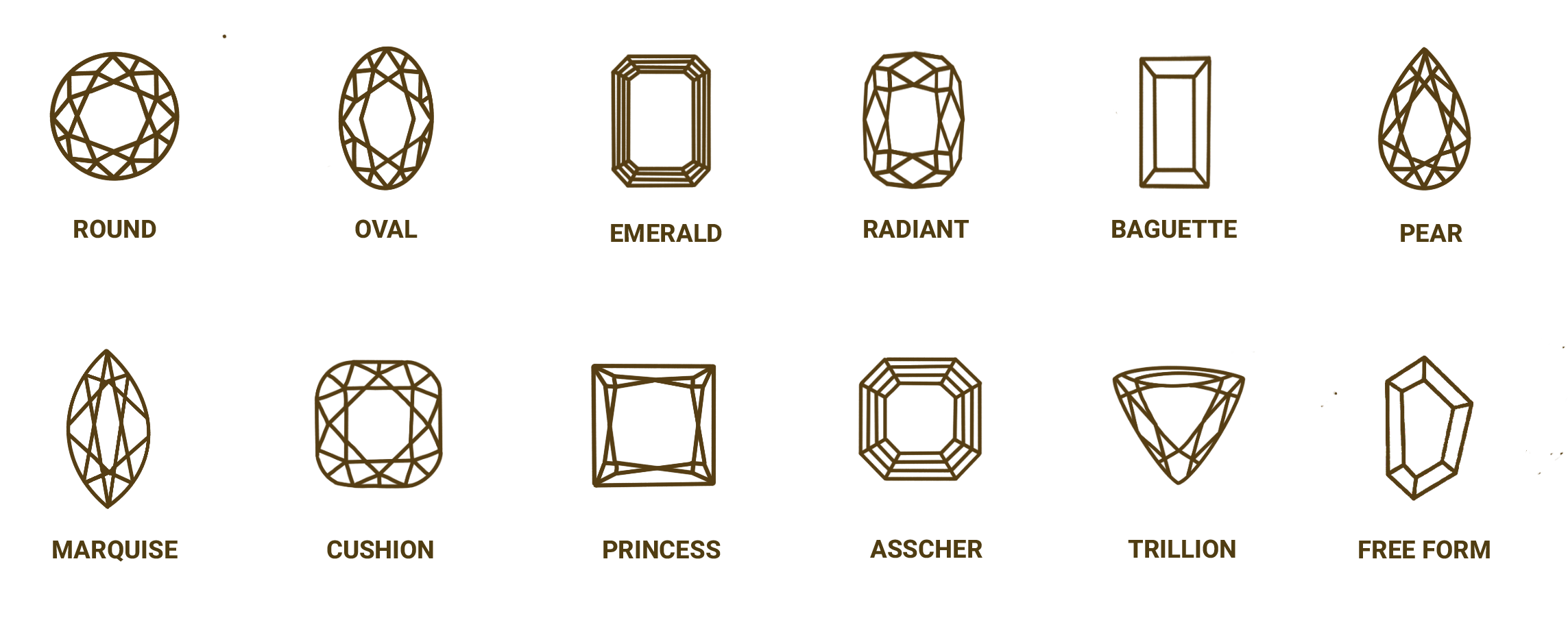
Gemstone Cuts
A selection of popular gemstone cuts.